


Self-help books have never really been my thing.Not because I don’t need the help, I almost certainly do…
Like most people, I overthink things. I replay conversations, worry whether I’ve said the wrong thing and spend far too much time caring about things that probably don’t deserve the headspace.
I’ve just never been drawn to books that promise to fix all of that in ten easy steps. Which is probably why it took me so long to pick up The Subtle Art of Not Giving a F*ck by Mark Manson.*
I assumed it would be loud, preachy and full of sweeping statements about becoming the best version of myself. It isn’t.
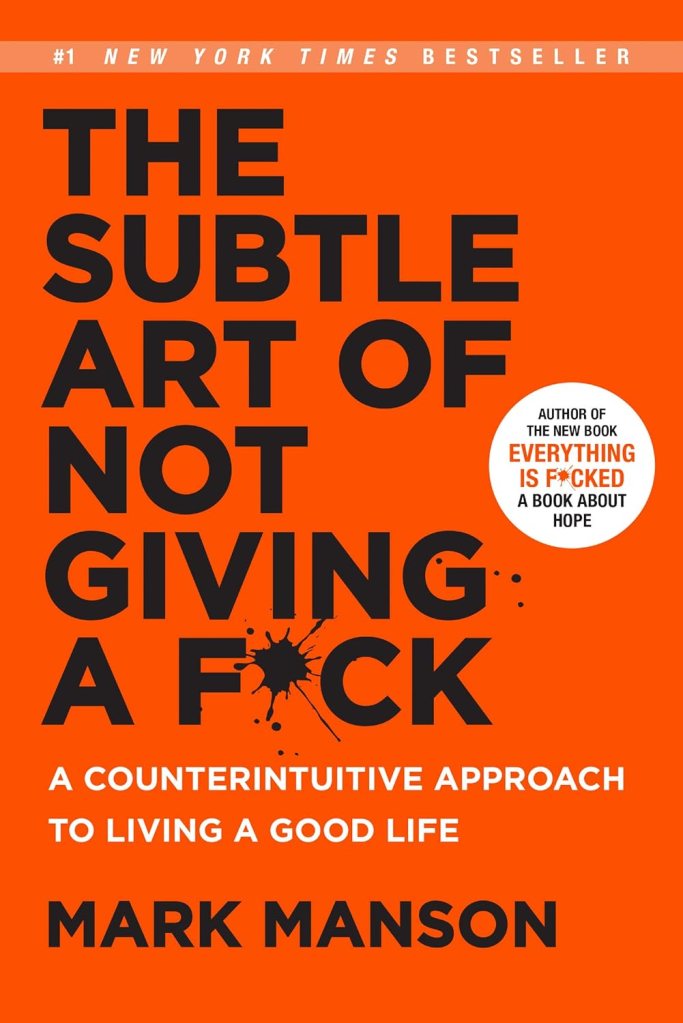
It Makes You Smile… Then Makes You Think
Yes, there’s plenty of swearing. But beneath the provocative title is a surprisingly thoughtful book about values, expectations, happiness and the exhausting pressure we often put on ourselves.
Rather than telling you to “manifest your dream life” or endlessly “think positively”, Manson takes a far more realistic approach.
Life is difficult.
Things go wrong.
People disappoint us.
We’re all carrying something.
And perhaps the answer isn’t trying to care about everything, but deciding what actually deserves our energy.
It’s strangely liberating.
You’ll Recognise People Along the Way
One of my favourite things about the book is the stories. Rather than relying solely on psychology or theory, Manson uses examples from history, famous figures and everyday life to bring his points to life.
Some of the people you’ll know. Some you won’t. But almost every chapter prompted one of those moments where I found myself thinking, “I know someone exactly like that.”Or perhaps, if I’m being completely honest… “I’ve been that person.”
It Doesn’t Tell You What To Do
That’s probably why I enjoyed it so much. The book doesn’t pretend to have all the answers. It doesn’t promise you’ll suddenly become happier, richer or more successful.Instead, it asks better questions.
What actually matters to you?
What are you worrying about that won’t matter in five years’ time?
Where are you spending emotional energy that could be better invested elsewhere?
They’re simple questions. Not always easy to answer. But worth asking.
What I Took From It
If I’m honest, I care about far too much.
I worry whether I’ve said the right thing. Whether I’ve replied to a message quickly enough. Whether I’ve offended someone without realising. And yes, I’m the person who occasionally wonders what the other mums think of me at the school gates… despite knowing, wholeheartedly, that they’re exactly the people who would be there to help in a flash if I ever needed them.
This book didn’t stop me overthinking overnight. What it did do was make me catch myself. Every now and then, when my mind starts running away with itself, I find myself thinking: “Does this actually deserve one of my f*cks?”
Usually, the answer is no. And that’s probably the biggest thing I took from the book.
Not to care less about the people I love or the things that matter, but to stop handing out my emotional energy quite so freely to the things that don’t.
For someone who doesn’t usually read self-help books, that’s a lesson I wasn’t expecting.
And yes… I’d recommend it. (Indeed, I already have to a fellow sceptic, let’s see if she’ll take something away too) Even if, like me, you’re convinced you’re not the target audience.
*currently free to download on Kindle.
Safe to say, I’ll be picking up one of Mark Manson’s other books before long. If they’re anything like this one, I’m expecting plenty more smiles, a few uncomfortable moments of self-reflection and probably another reminder to stop worrying about things that really don’t matter.


