


Forget red carpets and popcorn clichés Film Club isn’t about Hollywood glamour. The BBC’s new drama is a love letter to the small, personal rituals that keep us afloat, and to the people who sit beside us when the credits roll.
When a show is called Film Club, you might expect something overtly cinematic; a grand love letter to Hollywood. The BBC’s new six-part drama does love movies, yes, but at its heart it’s about something smaller, sadder, and far more human.
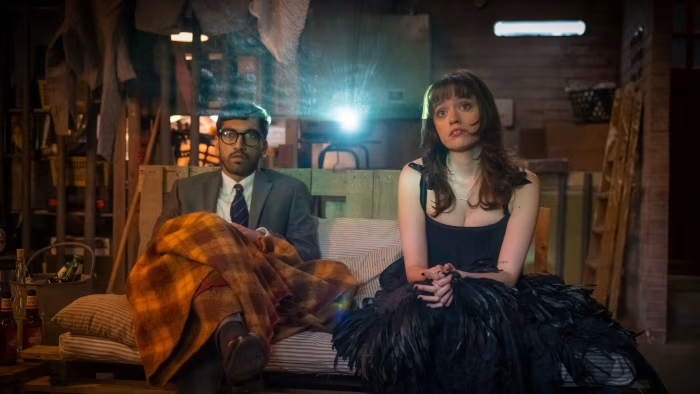
Created by and starring Aimee Lou Wood (most recently of White Lotus recognition) it follows Evie, a young woman whose life has shrunk to the size of her mother’s garage after a mental health crisis. Her escape is the weekly ritual she shares with her best friend Noa (played with quiet grace by Nabhaan Rizwan): themed movie nights that transform the garage into whatever world they choose. One week it’s Alien, another The Wizard of Oz. They act out the scenes, quote the lines, and, in Evie’s case, hide from reality just a little longer.

The beauty of Film Club is that there’s no melodrama or grand reveal, no therapy-speak or heavy-handed moral. Instead, it moves at the rhythm of real life, slow, awkward, occasionally funny, sometimes all three at the same time. Evie’s anxiety and isolation are handled with a gentleness. You believe her hesitations, her need for control, the way she clings to movie nights as both comfort and crutch.
Wood is superb and Rizwan matches her energy perfectly. Their friendship feels lived-in and believable, full of shared jokes and long silences. There’s clearly more than friendship simmering beneath the surface, but the show wisely avoids easy romance tropes. Instead, it lets affection linger in the spaces between words. Suranne Jones, as Evie’s mother Suz, adds warmth and realism, grounding the story in the unglamorous complexities of caring for someone who can’t quite face the world.

Visually, the series is playful and inventive. The garage transformations are a cinephile’s dream yet never becoming gimmicky. These flourishes serve the story, illuminating how it can be both sanctuary and disguise.
If there’s a flaw, it’s that the show sometimes feels almost too modest. At thirty minutes per episode, there’s not always enough time to develop the side plots or give full weight to the emotional arcs hinted at along the way. Some critics have found its tone too even, its storytelling a little safe. But that feels part of its charm. Film Club doesn’t want to overwhelm you; it wants to sit beside you quietly, pass the popcorn, and remind you what connection (tentative, unspoken, fragile) can look like.

It is not a sweeping romantic epic, nor is it a typical coming-of-age tale. Thoughtful, funny, and surprisingly moving, it captures the peculiar comfort of losing yourself in films when the real world feels too much. It’s a love letter not just to cinema, but to friendship, recovery, and all the ways we use stories to find our way back to ourselves.
All episodes are available to watch on iPlayer


